
Auckland has seen more short, intense downpours in recent years, and the North Shore has copped its share. NIWA’s projections point to more frequent extreme rainfall for the region, alongside rising sea levels and more pressure on stormwater networks. Traditional residential drainage was not designed for it.
As storms intensify, homeowners are realising that outdated gutters, undersized stormwater lines and poorly maintained drains leave a property exposed. Weather-proofing starts with strengthening drainage and plumbing. This guide covers how North Shore homeowners can protect their property with targeted drainage upgrades, storm-resistant plumbing improvements and seasonal preparation.
Why drainage is a critical part of home protection
For many homes, particularly older ones, the original drainage system was never built for today’s rainfall. Poor drainage creates a cascade of risks: foundation erosion, mould, internal leaks, backflow contamination, landscape damage and flooding.
A well-designed drainage system moves water away from the structure quickly and safely, keeping the home dry under severe weather.
Why North Shore homes are more vulnerable
The North Shore’s geography makes it worse. Homes near the coast face rising water tables and storm surge, while hillside properties get surface runoff that overwhelms ground-level drainage.
Key contributing factors:
- Clay-heavy soil that absorbs water slowly.
- Steep slopes that speed up water movement.
- Coastal exposure to wind-driven rain.
- Dense vegetation, which fills gutters with debris.
Together these conditions set up drainage failure, especially where the system has never been modernised.
Warning signs your drainage is failing
Before flooding happens, most homes show clear symptoms. Catching them early can prevent thousands of dollars of damage.
- Water pooling near exterior walls after rain.
- Repeated blockage of stormwater drains.
- Gutters overflowing even in mild showers.
- Musty smells, damp walls or visible mould.
- Soil erosion or washed-out garden beds.
- Gurgling or backflow in wastewater lines.
On a coastal or sloping section these need prompt professional assessment, because small failures escalate fast in a storm.
Recommended drainage upgrades
To properly weather-proof a home, focus on improvements that increase water-handling capacity, take pressure off underground systems and prevent backflow.
1. High-capacity gutters and downpipes
Modern high-capacity profiles move far more water than standard ones. They reduce overflow, stop water spilling into the eaves and protect cladding from prolonged moisture. See gutters, spouting and downpipes.
2. Surface drains and channel drains
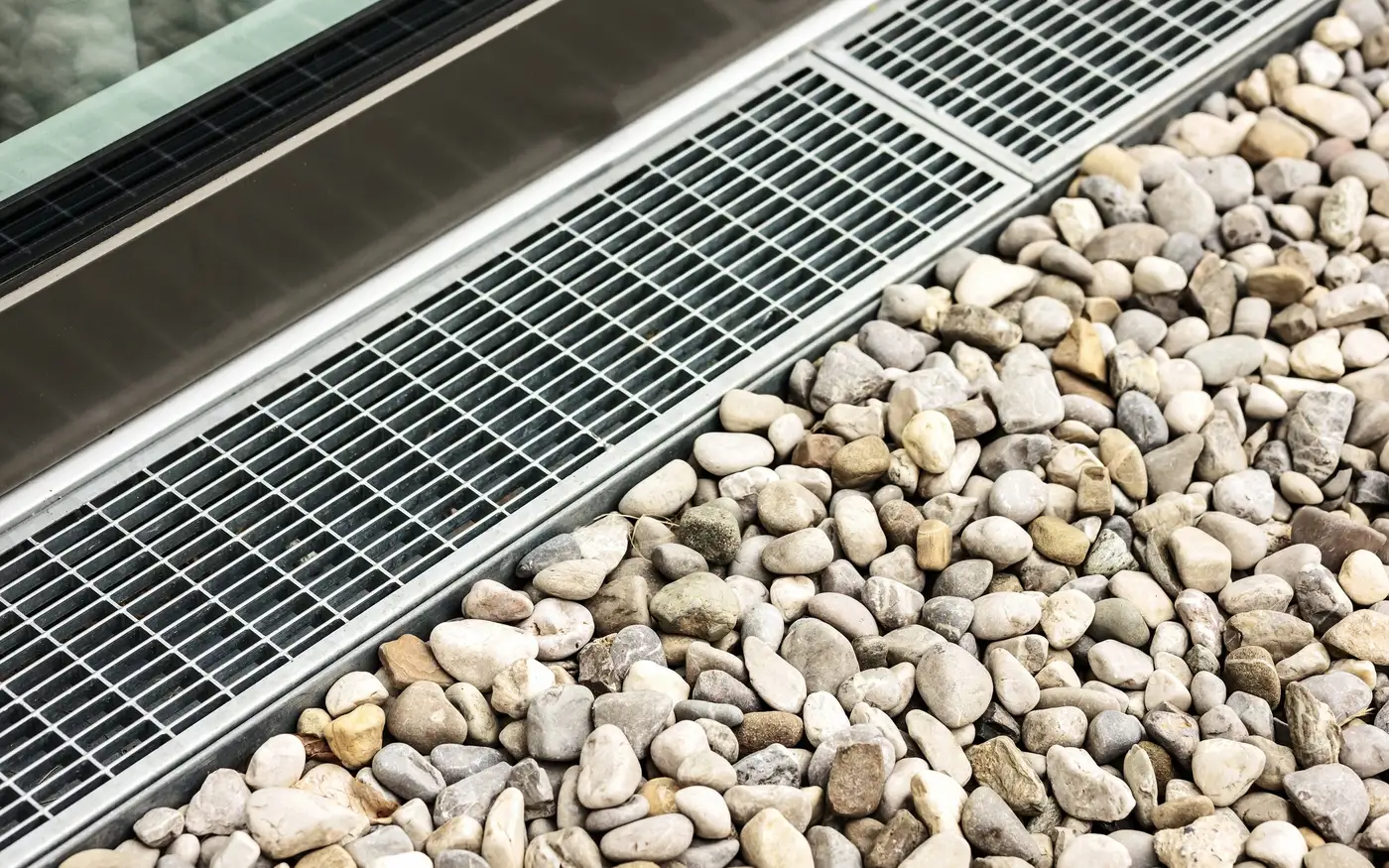
Ideal for driveways and patios, channel drains collect water from flat or sloped areas and redirect it quickly. That stops water creeping under doors or pooling around concrete foundations.
3. Stormwater pipe upgrades and extra inlets
Older North Shore homes commonly have 65mm or 80mm stormwater lines, which are undersized for modern rainfall. Upgrading to 100mm or larger PVC greatly increases capacity.
4. Sump pumps for flood-prone or coastal properties
A sump pump automatically removes water from a basement, garage or subfloor. They are particularly effective where the water table is high or the property is near an estuary.
5. French drains for waterlogged yards
A French drain uses perforated pipe wrapped in aggregate to disperse water underground. It works well in clay soils where water soaks in slowly.
Which upgrade suits which problem
| Upgrade | Best for | Typical life |
|---|---|---|
| High-capacity gutters | Heavy rainfall | 20 to 30 years |
| Channel drains | Driveways and patios | 15 to 25 years |
| Stormwater pipe upgrade | Older homes, small pipes | 50 years or more |
| Sump pump | Flood-prone areas | 7 to 12 years |
| French drain | Waterlogged soil | Depends on soil and maintenance |
Plumbing upgrades that support weather resistance
Weather-proofing is not only about stormwater. Sound plumbing keeps the inside of the home safe too.
Reinforced pipework
Storm pressure and ground movement crack older pipes. Modern PVC handles it far better.
Secured hot water cylinders
A cylinder that is not properly restrained can leak or rupture if it moves. Securing it is a simple fix.
Sealed penetration points
Wind-driven rain gets in through poorly sealed pipe penetrations. Professional sealing cuts internal moisture.
Overflow relief gully compliance
An overflow relief gully (ORG) makes sure wastewater flows away from the house, not into it. A non-compliant ORG is a major flooding risk.
Pre-storm preparation checklist
Before storm season:
- Clear gutters, downpipes and leaf traps.
- Inspect stormwater lines for root blockages.
- Test the sump pump.
- Check that ground slopes away from the house.
- Remove obstructions around drainage grates.
- Check ORG compliance.
- Seal vulnerable plumbing entry points.
These steps dramatically reduce storm vulnerability, especially for coastal or older properties.
When to call a drainage specialist
Repeated pooling, gutter overflow or slow stormwater drains all warrant a professional look. Backflow, foundation dampness or water entering living spaces need prompt assessment.
A licensed drainlayer identifies the structural risks, designs a solution for your property and makes sure it complies with Auckland Council requirements.
Final thoughts
Weather-proofing your home with modern drainage and plumbing is one of the smartest ways to protect it from the North Shore’s heavier weather. Proactive improvements reduce damage, lower repair costs and give long-term resilience.
HW Group provides drainage and plumbing solutions tailored to local conditions. Protect your home before the next storm: book a drainage or plumbing assessment.
FAQs
What is the most effective drainage upgrade for extreme weather? Upgrading stormwater pipes and adding inlets gives the strongest protection because it dramatically increases water-handling capacity.
Can poor drainage cause structural damage? Yes. It can lead to foundation cracking, soil erosion, mould and long-term instability.
How often should drainage be serviced? At least once a year, or twice a year for a property surrounded by trees or exposed to strong coastal winds.
Do drainage upgrades need council approval? Some stormwater redirection or new outlet work may. A licensed drainlayer can advise based on your property.
Are sump pumps effective for coastal homes? Yes. They protect against both storm runoff and rising groundwater.