
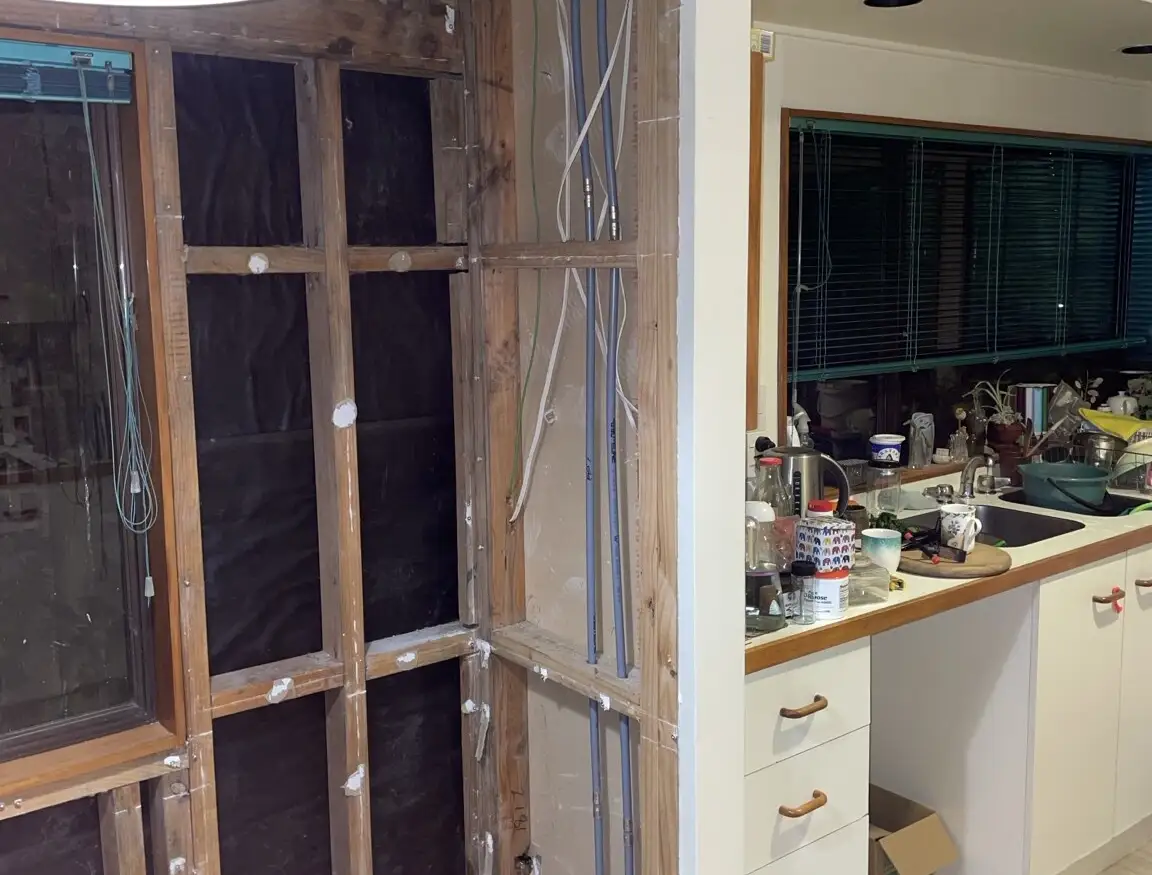
Dux Quest is the pipe that gives 1980s houses their reputation for leaks. It was cheap, quick to install and, for about a decade, everywhere. Then the fittings started to split. This guide covers how to tell whether your home has it, why it fails, what it means for your insurance and any sale, and what a full replacement involves. The dates and insurance points come from the Real Estate Authority, the Building and Construction Minister’s 2011 statement and the insurers’ own policy pages, not from hearsay.
What is Dux Quest, and when was it installed?
Dux Quest is an early polybutylene plumbing system, sold in New Zealand by Dux under a franchise from the American company Qest. The NZ Herald reported in 2011 that the franchise was negotiated in the late 1970s, and that the pipe was widely used in homes from 1977 until the mid 1980s, when problems started to emerge.
The official anchor for the end date is a 2011 statement from the Building and Construction Minister: Dux Quest “was withdrawn from the market about 24 years ago”, which puts the withdrawal at about 1987. The same statement says it “pre-dates the current Building Code and the Building Act”, and that when the piping was found to be problematic the manufacturer publicised the situation and offered to replace the product or pay for replacement material.
The Real Estate Authority’s guide to problem building materials describes it as plastic piping used in houses “in the late 1970s to early 1980s”, discontinued “after reports of pipes and fittings bursting throughout New Zealand”. Building inspectors add one nuance: existing stock kept being installed for a year or two after withdrawal, so a house finished in 1988 or 1989 can still have it.
Two things follow for the North Shore. The suburban edge kept moving outward through the late 1970s and 1980s, so there are plenty of homes from that era. And the Real Estate Authority’s advice covers houses “built or re-plumbed” in the period, because Dux Quest also went into 1960s homes in Glenfield, Northcote and the Bays when they were renovated or had their old galvanised pipe replaced.
A note on spelling: the American brand was Qest, so the pipe is usually printed “Dux Qest”. “Dux Quest” is how New Zealanders say it and search for it, and it is the spelling the Real Estate Authority uses. Both mean the same pipe.
How do I check if my house has Dux Quest pipes?
Start in the hot water cylinder cupboard, where the pipes are exposed and close to eye level. Then check under the kitchen sink and vanities, the laundry, and the roof space if you can get to it safely.
| Where to look | What Dux Quest looks like | What else you might see |
|---|---|---|
| Hot water cylinder cupboard | Black or grey plastic pipe into and out of the cylinder, white printing along it, bulky grey plastic elbows and tees | Copper (metal, sometimes with a green or brown tinge); modern PEX or polybutylene, often blue and red or cream, with brass fittings |
| Under the kitchen sink and vanities | Flexible dark pipe rising to the tap connections | Copper, or braided flexible hoses on newer taps |
| Laundry | Dark pipe to the tub taps and washing machine cocks | Copper |
| Roof space | Long dark runs clipped along the framing, printing often faded | Modern PEX or polybutylene |
| Subfloor, if accessible | The same, with a plastic fitting at every branch | The same |
Three rules make the check reliable:
- Read the printing, not the colour. Dux Quest came in black and in grey, and there is unmarked black plastic pipe that is not Dux Quest. The name printed along the pipe is the test.
- Look at the fittings. The bulky grey plastic elbows, tees and joiners are the giveaway, and they are also where most of the leaks start.
- Don’t trust one new-looking run. Past owners often replaced the pipe they could reach and left the rest in the walls and under the floor. Check the cylinder cupboard and the subfloor even if the pipe under the sink is new.
The printing fades, and in a roof space it can be unreadable. If you are not sure, photograph a length of pipe and a fitting and send it to a Licensed Plumber. We can usually confirm it from the photo. If the cylinder itself is wet rather than the pipes, that is a different problem: see our guide to a hot water cylinder leaking from the bottom.
Why does Dux Quest fail?
The Real Estate Authority puts it plainly: the product was discontinued after reports of pipes and fittings bursting throughout New Zealand. The accepted explanation is chlorine. Watercare chlorinates Auckland’s water supply to kill bacteria, and the early polybutylene resin and its plastic fittings reacted with it over the years, turning brittle and splitting from the inside. The same generation of pipe failed the same way in the United States and ended in a class action there in the 1990s.
Two patterns we see on the North Shore:
- Fittings go first, then the pipe. A split elbow or tee behind a wall is the usual first sign. Once one has gone, the rest are the same age and the same material, so a second and third failure tend to follow.
- Pressure upgrades bring it on. Replacing an old low pressure cylinder with a mains pressure unit puts 40-year-old plastic under far more load than it was installed for. If you are planning a cylinder upgrade in a home of this era, check the pipe first.
| What you notice | What it can mean | What to do |
|---|---|---|
| A damp patch or stain on a ceiling or wall, with no roof leak above it | A pinhole or split fitting in a concealed run | Photograph it, note the date, and call a Licensed Plumber. Tell your insurer promptly |
| Pressure drops at one tap or in one room | A partial split or a failing fitting | The same |
| A musty smell in a cupboard or under the house | A slow hidden leak | The same |
| A sudden burst | Sudden damage | Turn the water off at the toby at the street boundary, then call. Our burst pipes page has the steps |
What does Dux Quest mean for my insurance?
The Real Estate Authority’s guide says that “replacing the pipes is preferable to simply fixing the leaks, because some insurers will not cover damage caused by Dux Quest piping”. That is the only official statement on the subject, and it is worth taking seriously.
Here is how home policies are built, in the insurers’ own terms. Cover is designed for sudden and accidental damage. Damage that happens over time from a leaking internal pipe or tank is usually handled under a separate “hidden gradual damage” benefit with a capped contribution set out in the policy wording. Wear and tear, corrosion and gradual deterioration are excluded outright.
A known, repeatedly failing product sits awkwardly in that structure. The first burst may well be treated as sudden damage. After that, further leaks from the same pipe start to look like a maintenance matter rather than an accident, which is where the Real Estate Authority’s warning comes from. No public policy wording names Dux Quest, so the position varies by insurer and by policy.
What to do:
- Read your policy wording for “gradual damage” and “hidden water damage”.
- Ask your insurer, in writing, how they treat Dux Quest and whether a repipe changes your cover.
- Keep dated photos and invoices for any Dux Quest repair. A leak that is reported and fixed promptly is a much better claim than one that was left.
Buying or selling a North Shore home with Dux Quest?
Buying. The Real Estate Authority says that if a property has Dux Quest piping, the agent has to tell you if they are aware of it. Ask the question directly, and ask for the plumbing history. If the house dates from the late 1970s to the late 1980s, or was renovated then, have the building inspector check the cylinder cupboard and subfloor, and get a Licensed Plumber to confirm any plastic pipe before you go unconditional.
Selling. A completed repipe with the paperwork to show for it answers the question every buyer’s inspector will raise, and it removes a bargaining point. If you have Dux Quest and are not replacing it, disclose it and let the price reflect it.
Landlords. The plumbing is the owner’s responsibility. Ask tenants to report stains, damp smells or pressure changes as soon as they notice them, because a slow leak found early is a small job. A repipe is easiest between tenancies, when the house is empty and access is simple. Disclosure applies when you sell, as above.
Whoever you engage, our guide to choosing a plumber on the North Shore covers what to check before anyone starts.
Can I fix a Dux Quest leak myself, or replace a section?
No. Under the Plumbers, Gasfitters, and Drainlayers Act 2006, fixing or unfixing any pipe that supplies water to a fixture inside your property boundary is sanitary plumbing, which only a licensed person may do. The Plumbers, Gasfitters and Drainlayers Board’s consumer advice lists what a homeowner can do: install a dishwasher or washing machine, and replace or repair taps, ball cocks and plugs. Pipe is not on the list.
Check whoever you call on the PGDB public register and make sure the licence is current. Auckland Council’s own guidance says the same: the plumber must hold current authorisation from the Board.
Even done properly, patching one fitting on a system that is failing everywhere buys a little time and not much else. The Real Estate Authority’s advice to replace rather than repair is the right call for the pipe itself, and we say the same on the job.
What does replacing Dux Quest pipes involve?
A full repipe replaces every run of Dux Quest, hot and cold, from the point where the mains enters the house to each fixture. Here is what it looks like at your place:
- Inspection and a written scope. We trace which runs are Dux Quest, which have already been replaced, and where the access is. You get the scope and the price in writing before anything starts.
- New pipe. The water goes off and new pipe is run through the roof space, walls and subfloor, usually following the existing routes. We use PEX or copper depending on access and water pressure, and we tell you which and why.
- Access. Some gib has to be opened, typically small openings behind fixtures and at wall penetrations. We tell you in advance where the cuts will be, who reinstates and paints them, and what is and is not included. This is the part most quotes leave vague.
- Test and reconnect. Every run is pressure tested, every fixture is reconnected and checked, and the water goes back on.
- Paperwork. You get the documentation for your records, your insurer and any future sale.
Two practical points. A repipe pairs well with a bathroom or kitchen renovation or a hot water cylinder replacement, because the walls are open anyway. And building consent is usually not needed when a Licensed Plumber replaces pipe like for like without adding fixtures: Schedule 1 of the Building Act exempts that work, provided an authorised person does it. There is a durability carve-out that can apply to failed supply pipe, so we confirm the position for your property with Auckland Council before starting.
If a Dux Quest pipe has already let go, our burst pipes page covers the repair and what to do first. If you would rather know where you stand before that happens, send us a photo of the pipe in your cylinder cupboard and we will tell you what you have.